







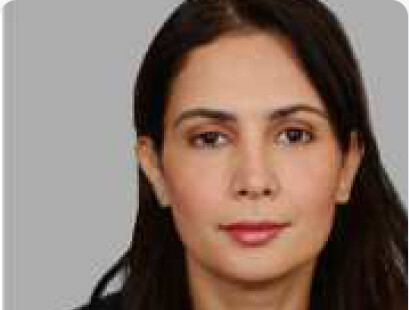
Behind Leila Jebbari’s career, one constant stands out: transformation as a common thread. It all began at Dell, where she worked on Six Sigma projects — process optimisation, defect reduction, a culture of operational excellence. She then joined Intelcia, where she gradually took on multi-country responsibilities, led post-acquisition transformations and managed several thousand employees in demanding multicultural contexts. But it was at Schneider Electric that the strategic turning point came. She took the helm of this energy management and automation giant in Morocco and Mauritania, in a post-COVID context, to revive growth, restore profitability and accelerate digital transformation. In doing so, she became the first Moroccan woman to head a multinational in the energy and engineering sector. She nonetheless takes a clear-eyed view of the changing place of women in leadership roles. While things are moving and their presence is becoming increasingly visible, including in historically male-dominated sectors, the gaps remain real, particularly in technical and industrial professions. For her, the obstacles are both structural and cultural, and begin well upstream, as early as access to science courses. For Leila Jebbari, “legitimacy is not claimed; it is built through impact, results and consistency”.
Beyond the symbols, she stresses the responsibility of women leaders to pave the way, to make their career paths more visible and to encourage more women to see themselves in such roles.
At the head of Cicor Morocco since July 2025, she approaches her role with her characteristic clarity: anchoring sustainable performance and positioning the organisation as a benchmark industrial platform within the Swiss group.
Leadership as a lever
Having worked in sectors as varied as telecommunications, services and energy has enabled Leila Jebbari to develop a strong ability to adapt. For her, the role of a leader goes far beyond knowledge of a sector. “What makes the difference is the ability to quickly understand an environment and to rally people around a clear vision,” she says. These experiences have forged a conviction: in uncertain contexts, the challenge is to align strategy, execution and human engagement. A requirement that becomes particularly apparent in phases of transformation, where the quality of leadership determines an organisation’s ability to bounce back.
Cicor Morocco: performance and industrial outlook
In a Moroccan context driven by industrial growth and ambitions of sovereignty, the opportunities are real: automotive, aeronautics, electronics, major structural projects. And for the Managing Director of Cicor Morocco, the challenge is to “turn these opportunities into concrete and sustainable growth, by aligning strategy, industrial capabilities and team engagement”. At Cicor Morocco, Leila Jebbari has set a course built around three structuring priorities: strengthening operational excellence by consolidating quality and performance standards; accelerating business development by positioning the company in higher value-added segments; and building an organisation capable of supporting this ramp-up, by aligning skills, processes and teams around a common project.
The link with the Swiss ecosystem, through Cicor and the Swiss Chamber of Commerce in Morocco, is a natural part of this trajectory. She sees in it a framework of shared high standards, a rigorous industrial culture and a bilateral network that builds concrete bridges between complementary ecosystems.
High standards, trust and responsibility
Her management culture is based on a balance: performance and empowerment. Clear objectives, a strong results culture, but also trust and the right to take initiative. She is convinced that the best performance comes from committed teams who understand the meaning of what they do and have the space to act. The values that guide her — responsibility, transparency, consistency between what one says and what one does — she applies first and foremost to herself. In a constantly changing environment, she sums up the role of the leader as follows: “Aligning strategy, execution and human engagement. That is where everything is decided.”
A balance built over time
Behind the executive, Leila Jebbari asserts a form of balance built with lucidity. Outside her duties, she makes a lot of room for time to step back, notably through reading, with a keen interest in leadership, economics and organisational transformation. She also remains very attached to her personal life, and in particular to her children, whom she regards as an essential anchor over the long term.
In a daily life marked by intense responsibilities, she does not believe in a strict separation between professional and personal life, but rather in disciplined organisation and the ability to prioritise. Creating breathing space thus becomes a condition for performance. An approach consistent with her vision of leadership: demanding, but aware that sustainability also depends on balance.
If you were…
If you were…
– A colour, which would you be and why? Blue. A colour that evokes clarity, depth and stability all at once. It reflects a way of approaching leadership with perspective and serenity, bringing clarity to complex environments.
– A country, which would you be? Iceland, a discreet but solid land, marked by resilience and balance. A country where people move forward steadily, holding their course in the face of constraints.
– A personality? Nelson Mandela, for his ability to combine firmness and dialogue, and to turn a vision into reality in complex contexts. A figure who embodies leadership that both gives structure and brings people together.
– An animal…? The eagle, for its broad perspective and its ability to keep an overall view while acting with precision.
– A connected object? The smartphone. A central tool, a symbol of agility and responsiveness.
– A superpower? Clarity. The ability to distinguish what is essential, to simplify complex situations and to make clear-sighted decisions in uncertainty.
– A book…? “On War” by Carl von Clausewitz. A reflection on complexity, uncertainty and the gap between theory and reality — notions that resonate directly with the challenges of management and transformation.