




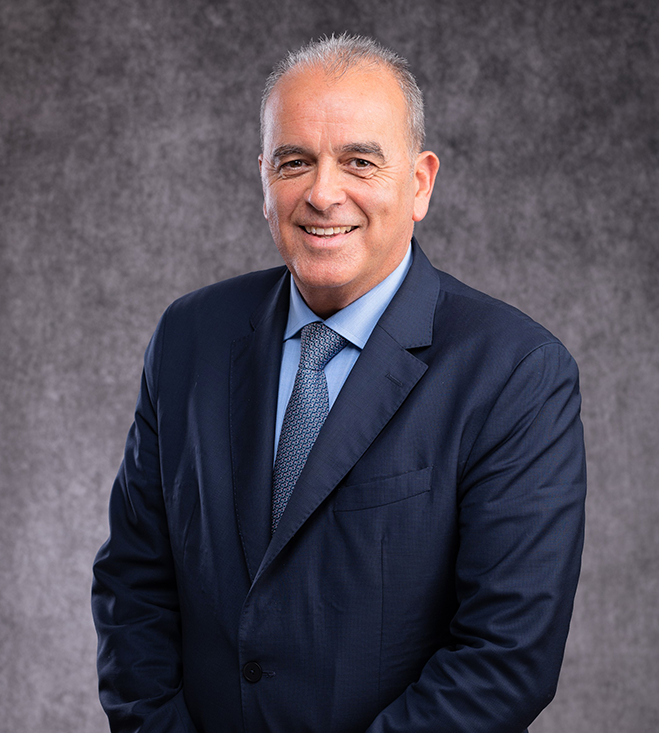
SWISSECO: In a context marked by rising European regulatory requirements, notably with the gradual entry into force of the CBAM (Carbon Border Adjustment Mechanism), how is BMCI supporting its industrial and exporting clients in their compliance and energy transition?
Karim Belhassan: The entry into force of the CBAM represents a major transformation of the international trade landscape, with direct repercussions for Moroccan companies. But beyond the constraints, it is a real opportunity for our country to accelerate the transition to a sustainable, decarbonised economy.
Faced with this urgency, BMCI is acting on several levels: we support our clients, particularly manufacturers and exporters, by raising their awareness of the regulatory issues and encouraging them to carry out certification audits. We also encourage them to draw on technical expertise through the assistance schemes made available by public or international institutions.
Our approach goes beyond simply decarbonising processes: we seek to structure shorter, resilient and sustainable supply chains. The objective is clear: to finance an ecosystem as a whole rather than an isolated player, by creating the conditions for coherent, systemic and lasting change.
SWISSECO: Companies, especially SMEs, often face obstacles in accessing financing suited to their growth or modernisation needs.
What specific levers or schemes does BMCI make available to further support the entrepreneurial ecosystem, including the members of the Swiss Chamber of Commerce in Morocco?
Karim Belhassan: SMEs are a priority client segment for BMCI, which devotes a dedicated strategy to them, validated and reaffirmed on several occasions by the BNP Paribas Group. They account for more than 70% of our client portfolio and benefit from around 40% of the loans granted, with steady growth. Our ambition is clear: to generate double-digit growth in this segment over the next five years.
To this end, the Bank relies on a network of 8 business centres spread across the Kingdom’s main cities, with teams dedicated to supporting SMEs. In addition, we are continually enriching our offering through innovative financing solutions and everyday banking services. At the same time, BMCI is actively working to conclude structuring partnerships with renowned national and international institutions.
Among the flagship schemes:
- GEFF III line (€35M) and MIDGEFF (€20M) in partnership with the EBRD, intended to finance our clients’ projects falling within sustainable finance while providing technical assistance and a grant towards carrying out the investment.
- Partnership with ECOVADIS, consisting of financing aimed at supporting our clients’ sustainable growth by incorporating ESG performance indicators (non-financial rating) and a trajectory for improving that rating, on which a reduction in the client’s initial interest rate is conditional.
SWISSECO: As a bank committed to standing alongside economic players, what innovative solutions has BMCI developed to help strengthen the competitiveness of Swiss and Moroccan companies operating in Morocco?
Karim Belhassan: BMCI is committed to proximity and partnership with companies, whatever their size or sector of activity. Through the expertise of the BNP Paribas group, it offers a comprehensive range built around six major business lines, providing an integrated response to clients’ needs, in a “One Stop Shop” approach:
- Flow businesses (Cash Management, Trade Finance, Factoring)
- Financing businesses (structured finance, leasing, property development…)
- Capital markets (FX, rates, securities management via BMCI 2S, etc.)
- Investment banking (Project Finance, Export Finance, M&A, etc.)
- Specialised services (Long-term leasing via Arval, insurance, etc.)
- Retail banking (Retail, private banking, consumer credit)
In a context of sustainable transition, BMCI also offers an innovative ESG offering, notably including subsidised-rate solutions. A pioneer on the Moroccan market, the Bank launched the Sustainability Linked Loan (SLL), a loan whose cost is indexed to the company’s non-financial performance. In practical terms, key performance indicators (KPIs) on environmental, social and/or governance matters are defined by mutual agreement between the Bank and the borrower. These indicators will be measured annually by an independent external auditor throughout the term of the loan. If the targets are met, the financing rate will be revised downwards.
BMCI has also launched an impact financing offer indexed to the non-financial rating provided by our partner ECOVADIS. In this simplified version of the SLL, the change in cost depends on the company’s rating, which must be reviewed every year. An improvement in the rating leads to a reduction in the interest rate.
In terms of subsidised solutions, BMCI offers several products that encourage green investment, such as GEFF in partnership with the EBRD. This is a programme dedicated to energy efficiency, renewable energy and resource management (water, waste, etc.). It is aimed at committed private companies and combines loan or lease financing with a grant and technical assistance. This partnership was renewed at the beginning of the year through the new GEFF+ programme with an envelope of EUR 65M.
BMCI also offers public co-financing through schemes such as Green Invest or Maroc PME.
For large-scale projects, the Bank acts as lead arranger, mobilising multilateral institutions (IFC, AFD, EBRD, etc.), notably for the renewable energy and infrastructure sectors.
This comprehensive, structured and responsible approach reflects a clear ambition: to support the competitiveness and sustainability of companies operating in Morocco, including Swiss companies, by offering them concrete solutions to successfully carry out their transformation.