







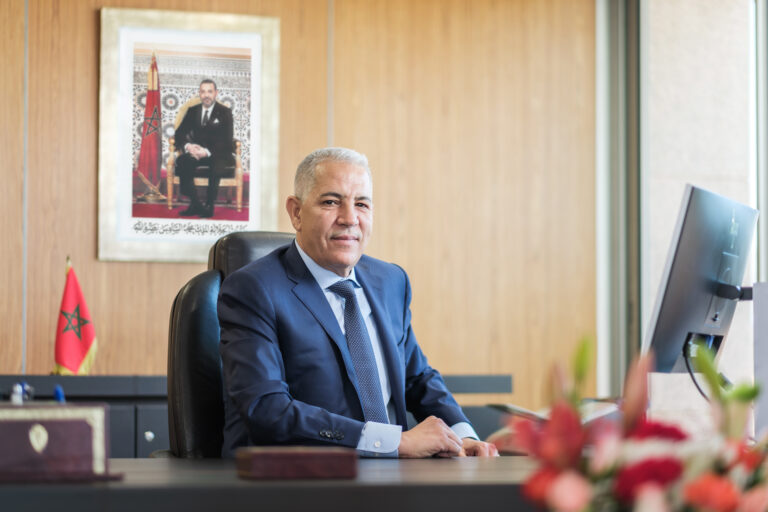
Mr Abdellatif Amrani, Director General of the ADII
In this interview, Mr Abdellatif Amrani discusses the strategic stakes of this transformation, the strengthened synergies with Switzerland, and the concrete benefits expected for economic operators, including Swiss companies established in Morocco.
SWISSECO: The pilot project launched with the Embassy of Switzerland aims to integrate Artificial Intelligence (AI) and machine learning into customs risk management.
What are the strategic stakes of this initiative for the ADII, and how does it fit into the overall drive to facilitate trade?
This project reinforces the AI initiative included in the ADII’s 2024-2028 strategic plan, which aims to integrate AI tools and techniques into various customs functions, notably customs risk management, alongside strengthening innovation and the digitalisation of customs processes.
The use of AI in risk management will mark a major evolution in our analysis and targeting approaches. By leveraging the massive volumes of data processed by our information system, it will significantly strengthen our ability to detect anomalies, better anticipate fraudulent behaviour and optimise control operations, while speeding up processing times.
This approach indeed enables better risk management, promoting the fluidity of trade and strengthening the competitiveness of economic operators. It also helps to increase transparency, security and trust in customs processes.
One of the major strengths of this project is the active participation of the World Customs Organization (WCO) as a stakeholder. This involvement guarantees an approach aligned with international standards, while giving the ADII international recognition as a player committed to customs innovation.
From an overall perspective, this initiative is fully in line with the drive to facilitate legitimate trade while ensuring the effectiveness of customs controls. It contributes to building a smarter and more resilient customs ecosystem.
SWISSECO: Within the framework of the Global Trade Facilitation Programme – Phase II (GTFP-II), what synergies do you wish to strengthen with partners such as Switzerland to accelerate the digitalisation and performance of Moroccan customs services?
Within the framework of the Global Trade Facilitation Programme – Phase II (GTFP-II), the ADII wishes to strengthen its synergies with strategic partners such as Switzerland, with a view to consolidating its achievements and continuously improving customs performance.
Today, Moroccan Customs stands out for its advanced level of digitalisation: the entire customs clearance process is fully paperless, giving economic operators the possibility of completing their formalities remotely, without being physically present at customs offices. This degree of technological maturity gives the Administration a benchmark position in terms of the dematerialisation of procedures.
As part of a proactive approach of continuous improvement and monitoring of international innovations, the ADII considers that a partnership with Switzerland represents a strategic opportunity to benefit from its expertise in integrating emerging technologies, such as artificial intelligence, predictive analytics and intelligent automation.
This partnership could also include a structuring capacity-building component comprising study visits, the development of joint solutions, exchanges of expertise and targeted training programmes. These initiatives would offer ADII managers a valuable transfer of know-how and direct exposure to best practices implemented in other contexts.
SWISSECO: What opportunities could this pilot project ultimately offer economic operators and Swiss companies established in Morocco in terms of the fluidity, transparency and competitiveness of trade?
The pilot project to integrate AI into customs risk management offers concrete opportunities for economic operators, particularly for Swiss companies established in Morocco.
Beyond improving the effectiveness of customs controls, AI will make it possible to facilitate and optimise customs procedures through a proactive approach. This development will result in shorter customs clearance times, lower costs linked to goods being held up and greater flexibility in managing logistics flows.
Furthermore, the integration of this technology into the customs clearance process will have a definite impact on increasing the level of transparency of customs operations, through automation and the reduction of human interaction.
Finally, this project is a strategic lever for improving the competitiveness of companies, by offering them a modern, efficient customs environment aligned with international best practices. It will thus help to increase the attractiveness of the Kingdom of Morocco as a leading logistics and commercial platform for investors.