





Webinar – The SDGs, foundations of a green and sustainable economy
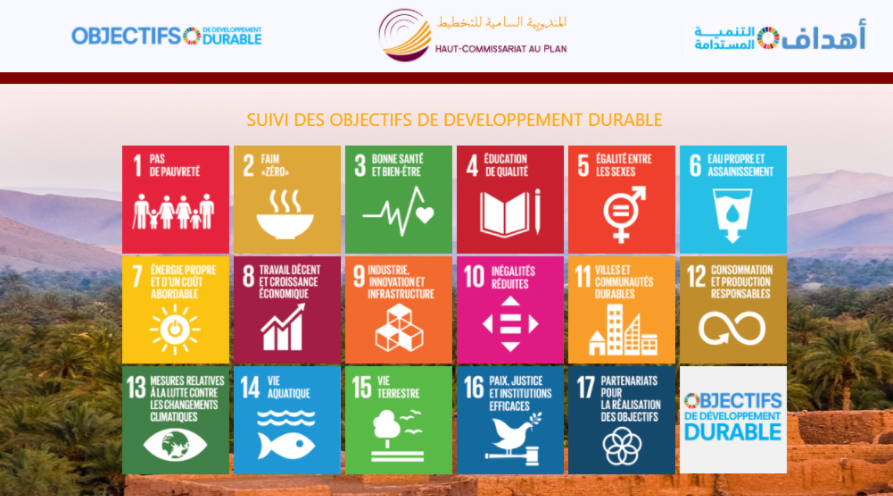
From now on, global efforts in favour of sustainable development will be based on the 17 Goals set out in the new 2030 Agenda. In this context, the Swiss Chamber of Commerce in Morocco (CCSM), in partnership with Philip Morris International, organised a webinar on 22 December on the theme: “What place for the Sustainable Development Goals in public policy in Morocco”, with a focus on sustainable consumption.
- Date
- Thursday 24 December 2020
“Sustainable development is development that meets the needs of the present without compromising the ability of future generations to meet their own needs”. It was with this famous definition, taken from the 1987 Brundtland Report of the World Commission on Environment and Development, that the webinar organised by the CCSM on 22 December opened. This new virtual event shed light on the place of the Sustainable Development Goals (SDGs) in the Kingdom’s public policies. The meeting attracted great interest and featured Abdesslam Nadah, Director of Planning at the High Commission for Planning (HCP), and Kamal Himmich, Partner at Ernst & Young.
The SDGs in Morocco, a place of honour
Even before the advent of the SDGs, Morocco had undertaken wide-ranging structural reforms since the 2000s. “One third of GDP has been invested in economic and social infrastructure, the fight against poverty and social inequality, the development of natural resources and the mitigation of the effects of climate change”, said Abdesslam Nadah, Director of Planning at the High Commission for Planning (HCP).
By signing up to the 2030 Agenda, the Kingdom committed to implementing the Sustainable Development Goals. “We must continue to make these SDGs a genuine catalyst for the country’s growth dynamic and place them at the centre of public debate at national and regional level by organising consultations, particularly with civil society”, the HCP representative was keen to point out.
In addition, to ensure the coordination of the SDGs as well as their monitoring and evaluation, a National Sustainable Development Commission has been set up with the participation of the various ministerial departments and the High Commission for Planning. “The HCP plays an important role in institutionalising the mechanisms for monitoring and implementing the various goals, notably through producing SDG indicators and disseminating statistical data”, Abdesslam Nadah recalled during his presentation.
Focus on SDG 12
Morocco is part of the international drive to transform production and consumption patterns towards sustainability through numerous actions. Progress has been made in strengthening the legal framework for environmental preservation through the adoption of a set of laws on environmental protection and energy efficiency.
At international level, Morocco has ratified the main multilateral environmental conventions. At the strategic level, in 2016 Morocco drew up a National Framework Plan on Sustainable Consumption and Production and two sectoral plans, “Sustainable eco-construction and buildings” and “Sustainable agriculture and food”, as part of a SwitchMed Regional Programme financed with the support of the European Union.
Along the same lines, and in order to lay the foundations of a green and inclusive economy in Morocco, the management of waste production, its reduction and its recovery are fundamental dimensions. With this in mind, environmental policy on waste management is based on the National Household Waste Management Programme. “To bring about the emergence of a green economy, specific funds have been set up to finance environmental protection actions and reduce pollution linked to industrial production, such as the Industrial Pollution Control Fund (FODEP) and the National Fund for the Environment and Sustainable Development (FNEDD)”, said the Director of Planning at the HCP.
Innovative taxation serving sustainable consumption
International experience with ‘eco-taxation’ and the use of economic instruments for sustainability purposes has highlighted the fundamental importance of these instruments as effective levers for developing new collective behaviours that favour the environment and sustainable development. “Some countries, such as Mexico, South Korea and the Netherlands, have introduced targeted tax mechanisms aimed, for example, at discouraging certain products, notably through taxes on sugar. These mechanisms also stimulate demand for alternative products through more attractive rates or exemptions. This is the case, for example, with electric cars”, said Kamal Himmich, Partner at Ernst & Young, while presenting concrete examples of the role of innovative taxation in promoting sustainable consumption.
In Morocco, this type of approach is still very recent. The national tax system gives little room to environmental protection. “The objective pursued is essentially budgetary and does not encourage behaviours and attitudes considered favourable to the environment”, the speaker added. Nevertheless, the Kingdom is making enormous efforts in this direction by introducing mechanisms that incorporate environmental considerations (VAT exemption on photovoltaic panels, exemption from the vehicle tax for hybrid and electric vehicles, and a 50% increase in the domestic consumption tax (TIC) on sugary non-alcoholic drinks…).
A national sustainable development strategy is above all an ongoing process based on objectives to be achieved and on the effective, genuine implementation of the projects identified.
Take your business international
Join a network of leading, forward-thinking executives and business leaders to accelerate your bilateral business opportunities.
Become a member