




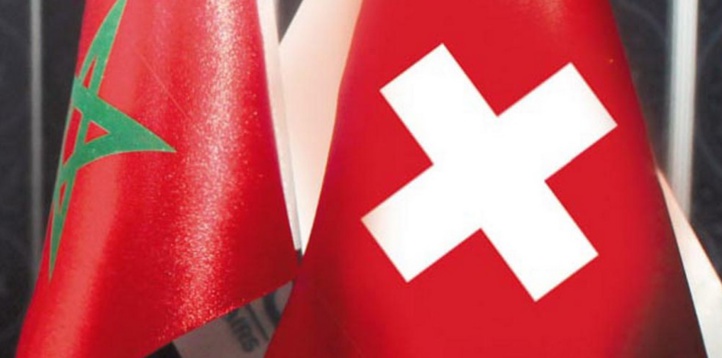
Webinar – Swiss economic cooperation in Morocco: SECO presents its projects!
Which Swiss economic cooperation projects are there in Morocco? That is the question answered by the speakers at the webinar organised by the Swiss Chamber of Commerce in Morocco, in partnership with the Embassy of Switzerland in Rabat, on 24 November 2020. The aim: to present the programmes in Morocco of SECO, the State Secretariat for Economic Affairs.
- Date
- Tuesday 22 December 2020
“2021 will mark the 100th anniversary of Switzerland’s diplomatic presence in Morocco”. It was with this reminder from Pierre-Yves Morier, Deputy Head of Mission and Head of Cooperation at the Embassy of Switzerland in Morocco, that the webinar organised by the CCSM on the theme “Which Swiss economic cooperation projects in Morocco?” opened.
For Bern, Morocco is seen as a gateway to the rest of Africa. It is also a country driven by interesting economic dynamism and a strong presence of Swiss companies (Switzerland’s 7th-largest trading partner in Africa in 2019).
Furthermore, 2021 will see Switzerland adopt its 2021-2024 international cooperation strategy, whose main focuses are poverty reduction and sustainable development. In this context, a number of development projects will be led directly by SECO in the Kingdom.
In terms of trade promotion, sustainable tourism in the spotlight…
One of SECO’s new projects in Morocco concerns the development of sustainable tourism. With a budget of 3.85 million Swiss francs over the period 2020-2025, the project, designed and rolled out in partnership with the Moroccan Agency for Tourism Engineering and the Moroccan Ministry of Tourism, is managed by the Swisscontact foundation. “ The project will be implemented in the Beni Mellal-Khenifra region, which has been identified as having strong development potential for sustainable tourism”, explained Marine Peretti- Willemetz, Programme Manager at SECO, during her presentation.
The project targets three pillars. The first concerns the development of framework conditions conducive to the development of sustainable tourism. The second aims to strengthen the competitiveness and market access of certain sectors within the tourism value chain. As for the third pillar, it targets the development of tourism skills. “As many operators in the sector do not have the qualified workforce to support their growth, the project includes a whole component devoted to providing online training and developing new training courses for professions linked to mountain tourism, such as guides”, said Ms Peretti. Giving a progress update, she added: “the first year, devoted to preparing the project’s interventions, is coming to an end. That said, we have experienced delays due to the outbreak of the epidemic”.
… but not only that
Other sectors receiving SECO support: textiles, agro-industry and fishery products.
Targeting other countries in addition to Morocco, the Swiss Import Promotion Program (SIPPO) aims in Morocco to increase exports from the sectors mentioned by supporting the organisations that assist these sectors. In particular, the programme facilitates the entry of these organisations and their members into target markets.
The GTEX project, also financed by SECO, supports the export competitiveness of companies in the textile and clothing sector by improving the institutional ecosystem and working directly with SMEs.
In terms of private sector development, “the project portfolio has three main objectives: improving the business climate, adapting professional skills to market needs and facilitating access to financing”, said Christine Lewis, Programme Manager at SECO. Indeed, with the support of the International Finance Corporation (a member of the World Bank Group), the aim is to support the National Business Environment Committee at national level and, at sub-national level, the Regional Investment Centre of Marrakech- Safi, with the objective of reducing payment terms in public procurement and promoting reforms to improve competitiveness. Another project concerns improving the professional skills of the workforce to adapt to the market, including through HR practices focused on equal opportunities and diversity.
The programme called “Women Banking Champions”, for example, aims to facilitate access to financial and non-financial services for companies owned or managed by women. “In the same vein, the activity of the Sanad investment fund will continue to support micro, small and medium-sized enterprises in accessing microcredit through local financial institutions. The same applies to the Swiss Investment Fund for Emerging Markets (SIFEM), which continues to provide financing to commercially viable or high-growth small and medium-sized enterprises”, added Ms Lewis.
In terms of macroeconomic support, Switzerland promotes framework conditions favourable to economic development and strengthens the resilience of public finances through several projects supporting the Ministry of Finance and the Central Bank of Morocco (Bank el Maghrib). SECO provides, among other things, technical assistance to protect public finances against the risks of natural disasters, support for public debt management, and assistance aimed at strengthening the stability of the financial sector, said Mr Stephan Eggli, Programme Manager at SECO.
As for infrastructure financing, “this is also an area where Swiss expertise is made available to Morocco”, explained Silvio Giroud, Programme Manager at SECO. Through the Sustainable Cities programme implemented by the International Finance Corporation, the objective is to improve regions’ and municipalities’ access to private-sector financing in order to fund urban infrastructure. “The technical assistance provided under the project helps cities to improve their credit rating, to better prioritise infrastructure projects within comprehensive urban planning, and to improve the bankability of projects, in order to improve their eligibility for bank credit”, the expert explained in detail.
Swiss know-how also comes into play in urban planning. Africa is facing strong population growth, which is leading to the rapid expansion of cities. Yet major shortages of expertise to support this growth are recorded throughout the continent. SECO has therefore formed a partnership with the Swiss Federal Institute of Technology in Lausanne – EPFL and several African universities, including Mohammed VI Polytechnic University (UM6P), to develop a digital education platform focused on urban development topics (urban planning and mobility, energy management, water and sanitation, climate change adaptation and urban resilience). The objective is to increase the range of high-level online continuing education for private- and public-sector executives, as well as for students, leading to structuring qualifications. The pan-African approach encourages the exchange of experience and offers an opportunity to export Moroccan know-how on the subject.
SECO’s Economic Cooperation and Development Division
Reporting to the Federal Department of Economic Affairs, Education and Research, this institution, which is part of SECO, targets economic growth and sustainable prosperity. It also aims to promote reliable economic policy framework conditions and to support innovative private-sector initiatives, within the framework of the 17 goals set by the Member States of the United Nations and brought together in the 2030 Agenda. SECO does not act alone. It is supported by partners such as multilateral organisations, the private sector, universities and non-governmental organisations.
Take your business international
Join a network of leading, forward-thinking executives and business leaders to accelerate your bilateral business opportunities.
Become a member