





Webinar “Exports in the face of Covid: current situation and opportunities”
The Covid-19 health crisis has had a considerable impact on international trade. Yet Morocco has been only slightly affected. The reason is …
- Date
- Tuesday 23 November 2021
Webinar “Exports in the face of Covid: current situation and opportunities” Morocco’s potential
The Covid-19 health crisis has had a considerable impact on international trade. Yet Morocco has been only slightly affected. The reason is simple: Moroccan exports are, at their base, limited to low value-added products. However, the export potential of the Moroccan economy is enormous. How can it be boosted? That was the question raised during the webinar entitled “Exports in the face of Covid-19: current situation and opportunities”, organised by the Swiss Chamber of Commerce in Morocco in collaboration with the Embassy of Switzerland on Tuesday 28 September. The meeting was moderated by the President of the CCSM, Christophe de Figueiredo. The speakers included Pierre-Yves Morier, Deputy Head of Mission and Head of Cooperation at the Embassy of Switzerland in Morocco; Hicham Amadi, Vice-President of ASMEX; Zouhair Triqui, Secretary General of the Moroccan Investment and Export Development Agency (AMDIE); Lhassane Hallou, Director of Facilitation and IT at the Customs and Excise Administration (ADII); and Larbi Bourabaa, representative of SIPPO (Swiss Import Promotion Programme) in Morocco.
The health crisis opens up new opportunities in Morocco
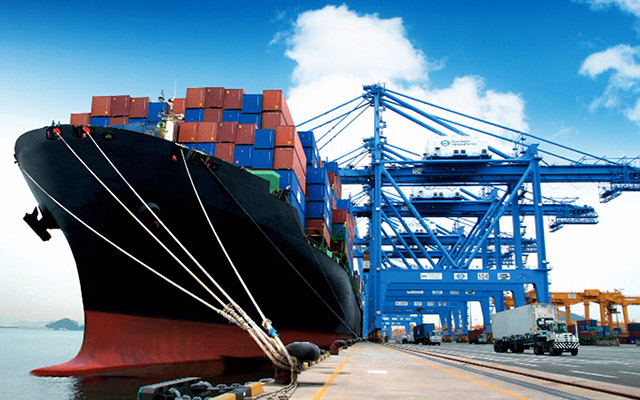
The tone was set by Hicham Amadi’s speech: “Moroccan exports remain very far from their potential”. Indeed, a study commissioned by ASMEX and carried out by the firm Mazars revealed that the equivalent of 15 billion dollars in goods and services could be exported if minor adjustments and investments were made. According to the study, Morocco’s geostrategic position as a hub between Europe and Africa, together with its port capacity, could give it a greater role in international trade. Moreover, Moroccan industry is not yet developed enough to process basic products, particularly in agriculture. These needs are confirmed by the commercial consequences of Covid-19 around the world. Many countries have been reconsidering their supply chains since the onset of the crisis. “This is bringing about a transformation in relations between countries, which must now ask themselves how to support their partners in moving forward”, Amadi stressed.
Thanks to its good regional positioning and its good relations with its African neighbours, Morocco has become an exporter of goods, but above all of knowledge, particularly in the digital field. Moroccan achievements in digitalisation inspire its neighbours on the continent. That said, as it is not a technology-producing country, Morocco is becoming a hub for the transfer of know-how. A role that is increasingly attracting international operators to set up in the Kingdom.
Zouhair Triqui, Secretary General of AMDIE, for his part, recalled that the role of his institution is “the promotion of Moroccan investment and exports”. A mission that led it to develop and promote the “Morocco Now” brand. Recently unveiled, the brand is intended as an industrial platform for seizing the opportunities of a changing world, in which new requirements for economic players, such as the environmental emergency, consumer pressure and new regulations, make the adoption of decarbonised production essential. The pandemic, meanwhile, has led to a reorganisation of global value chains towards less global dependence and greater regional integration. And Morocco has every asset needed to be attractive. In addition to its proximity to the largest markets (Africa and Europe), the Kingdom has accelerated the transformation of its industry.
Customs, a champion of digital transformation
Another witness to this Moroccan determination to boost its trade capabilities was Lhassan Hallou, Director of Facilitation and IT at Customs. In his view, the customs administration is one of the few in the country to have completed its digital transformation. A successful shift, and one that paid off in the middle of the pandemic. “ All signature legalisations have been dropped. A way of placing trust in companies”, Lhassan Hallou enthused. ADII has also switched to fully digital operation. “We spent years simplifying our procedures. That made the switch to fully digital very simple. Today, an operator can send and obtain all the documents and information they need without leaving their PC. In addition to other advantages such as free zones exempt from customs duties, Morocco has made its ports accessible, and quickly, in line with the most demanding global standards”.
Switzerland supports Morocco
Morocco is one of the eleven beneficiary countries of the Swiss Import Promotion Programme (SIPPO). According to Larbi Bourabaa, “this well-established mandate of the State Secretariat for Economic Affairs (SECO) has the overall vision of sustainable and inclusive economic growth and the integration of SIPPO partner countries into world trade. This is achieved through its mission of supporting trade support organisations to increase their export promotion capacity and provide effective services to export-ready companies”. In Morocco, SIPPO has partnered with the Moroccan Textile and Clothing Industry Association (AMITH), the National Federation of Fish Processing and Upgrading Industries (FENIP), the Moroccan Exporters’ Association (ASMEX), as well as AMDIE, MOROCCO FOODEX and the Agricultural Development Agency (ADA). These operators represent the three sectors currently targeted by SIPPO in MOROCCO: value-added fish and seafood, organic and processed local food products, and value-added textiles. In partnership with the International Trade Centre (ITC), a United Nations body, the Swiss SIPPO programme has carried out assessments and needs identification for the partner sector associations and export promotion bodies. The aim is to identify the potential for improving their export promotion services by supporting the development of their capacities to manage, implement and adapt their export strategies to the new requirements of international markets (connectivity, sustainability, digitalisation) through coaching, training, backstopping, advice and other support methods.
This meeting, organised by the CCSM in collaboration with the Embassy of Switzerland, shows that Morocco holds all the cards to develop its export potential. And it is the continuation of economic reforms that will energise the Moroccan industrial fabric and thus develop “Made in Morocco” products that are competitive on international markets.
Take your business international
Join a network of leading, forward-thinking executives and business leaders to accelerate your bilateral business opportunities.
Become a member